
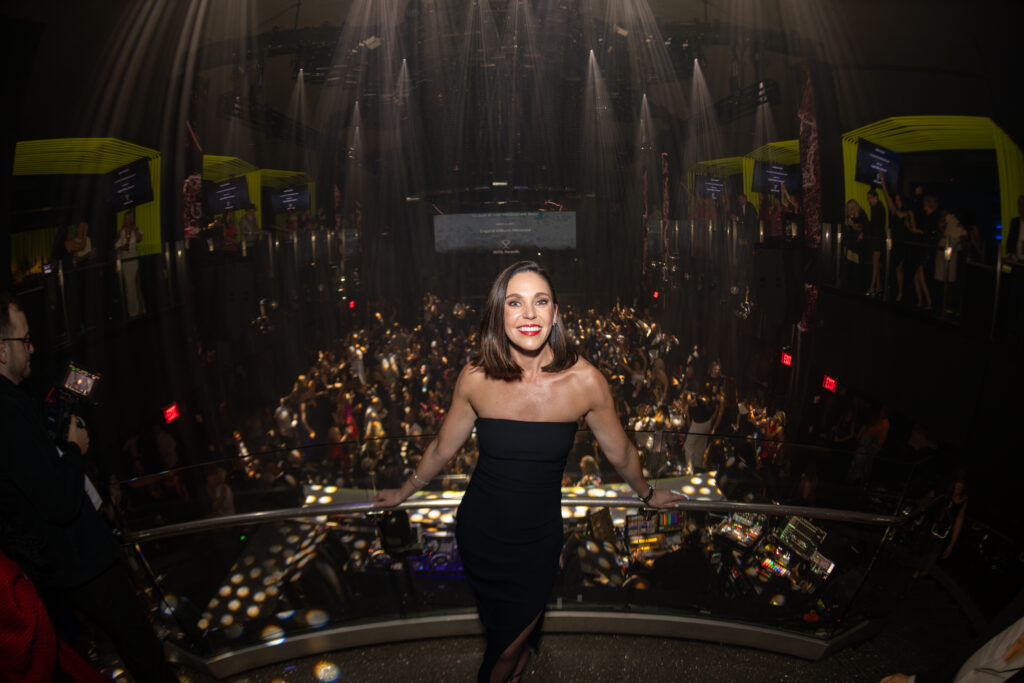
There’s a particular kind of evening I’ve come to recognize over the years. White dresses against the glow of the ocean. Music carrying just enough to soften the edges of conversation. A space that feels both effortless and quietly intentional—conversations unfolding, laughter weaving in and out, familiar faces pulling you from one moment to the next. I’ve stepped into rooms like that many times before. And for a long time, I understood exactly where I fit within them. I was the connector. The one making introductions, bridging conversations, filling in the gaps. The one holding the iPhone, capturing the photo, making sure everyone else had the moment. It wasn’t something I questioned. It was simply where I operated.
This time felt different. Not all at once. Not in a way that announced itself. But in small, unmistakable shifts. The kind you don’t fully register until you’re already inside them.
It hadn’t started in Miami. Looking back, it had been building for a while. At first, it was subtle. Someone asking for a photo of both of us instead of just Paul. Then being pulled into group shots, not just as a familiar face, but as someone people wanted included.
I didn’t think much of it then. But over time, it became something I could feel before I could explain. A shift in attention. In energy. In the way people approached me. Not loud. Not overwhelming. Just… different.
For a long time, I had been the one observing that from the outside. Watching the people who seemed to hold that kind of presence. The ones others gravitated toward. The ones who carried a certain kind of recognition into a room.
It wasn’t unfamiliar territory, but it had never been the reason I was there. And at some point, without marking the moment, I had stepped into it.
By the time Miami came around, I knew it would feel different. Not because I was trying to step forward. But because something I had created was now out in the world. And people were meeting me through it.
There’s a particular kind of vulnerability in that. Not just being seen, but being known, even if only in part. It changes the way people approach you. It changes the way you move through a room you once moved through quietly.
And in Miami, that shift became unmistakable. People weren’t asking about Paul. They were asking about me and the book. They weren’t talking around me. They were speaking directly to me about chapters, about lines that stayed with them, about what it meant to them in their own lives.
There were moments where someone would hand me a book to sign. My book. And others where they asked if I had brought copies, hoping to leave with one, signed.
What struck me most wasn’t the attention itself. It was the shift in dynamic. Conversations I used to listen in on became conversations I was leading. People I had known in one context were now meeting me in another. Nothing about the room had changed. Only my place within it.
And then there was Paul. He never needed to stand in front of me to lead, and he always let me shine. He wasn’t watching it happen. He was part of it. Steady. Proud. Completely unshaken by the shift in attention. If anything, he welcomed it. And in that moment, it was clear: this was never about trading places.
There’s an energy to being in that kind of light. It’s warm. Immediate. Easy to lean into. You feel it in the way people look at you, the way they approach you, the way your presence lands differently than it once did. And I won’t pretend it isn’t something I appreciate. There’s a kind of gratitude in it. A quiet disbelief, even.
But I’ve come to understand something about that kind of light. It’s like the sun. You can feel it the moment you step into it—the warmth settling across your skin, the pull to stay just a little longer, to take in as much of it as you can. And for a while, it feels good. Natural, even. But you’re not meant to live there. Stay too long, and what once felt energizing begins to wear on you. The same light that warmed you starts to take more than it gives. So you step in. You feel it. You let it reach you. And then you step back out.
Because what sustains everything isn’t the spotlight itself. It’s what exists outside of it.
There’s a tendency to think of visibility as a turning point. As if being seen replaces everything that came before it. But it doesn’t. If anything, it reveals it. All of the quiet work. The unseen effort. The years spent moving through rooms without needing recognition, they don’t disappear when the spotlight finds you. They’re the reason you’re able to stand in it.
For a long time, I moved through rooms like that without needing to be known. This time I was. Not separate from who I had been in those spaces, but because of it.
There’s a difference between being invited into a room… and having a place within it. This was the first time it felt like both.